101 methods. Enter anywhere. Field-standard innovation and R&D methods, mapped onto the S4IL framework.
A practitioner’s reference: each method in one line, with a neutral source. The methods are field-standard; S4IL is the framework that organizes them.
All 101 methods, across four domains and the memory and measurement layers beneath them.
Four non-linear domains over an organizational-memory base, measured by an R&D rigour layer. Enter at any domain and iterate freely.
The catalogue
References point to neutral, encyclopedic or standards-body sources: Wikipedia, OECD, ISO. Entries marked Author’s framework are original constructs.
Where to Play
Foresight & Signal Intelligence
17 methodsInput
Sensing the field before committing resources: detecting signals, framing futures, choosing arenas.
Books for this domainStrategic Foresightwikipedia.org
Structured anticipation of plausible futures to inform present decisions.
wikipedia.org
Horizon Scanningwikipedia.org
Continuous monitoring of emerging developments at the periphery.
wikipedia.org
Environmental Scanningwikipedia.org
Systematic surveillance of the external context for threats and opportunities.
wikipedia.org
Weak / Strong / Faint Signal Scoutingwikipedia.org
Early detection of nascent shifts before they become obvious.
wikipedia.org
Megatrends & Trends Mappingwikipedia.org
Identifying large-scale, slow-moving forces shaping the landscape.
wikipedia.org
PESTLE / BANIwikipedia.org
Macro-environment analysis; BANI characterizes brittle, anxious, non-linear, incomprehensible conditions.
wikipedia.org
Cynefin Frameworkwikipedia.org
Sense-making across clear, complicated, complex, and chaotic domains.
wikipedia.org
Scenario Planningwikipedia.org
Building multiple internally-consistent futures to stress-test strategy.
wikipedia.org
Design Fictionwikipedia.org
Speculative artifacts and narratives used to probe and critique possible futures.
wikipedia.org
Three Horizons Frameworkwikipedia.org
Mapping current core (H1), emerging (H2), and transformational (H3) bets.
wikipedia.org
Backcastingwikipedia.org
Working backward from a desired future to identify required moves today.
wikipedia.org
Causal Layered Analysiswikipedia.org
Reading futures across litany, system, worldview, and myth layers.
wikipedia.org
Futures Wheelwikipedia.org
Structured mapping of first-, second-, and third-order consequences.
wikipedia.org
Delphi / Real-Time Delphiwikipedia.org
Iterative expert elicitation to converge on uncertain forecasts.
wikipedia.org
Patent & Publication Landscapingwikipedia.org
Quantitative trend detection from patent and research corpora.
wikipedia.org
AI-Augmented Signal Intelligencewikipedia.org
LLM-driven scanning, clustering, and triage of foresight signals.
wikipedia.org
Agentic Deep-Research Foresightwikipedia.org
Multi-step research agents that gather, verify, and synthesize foresight briefs.
wikipedia.org
How to Win
Ideation, Shaping & Selection
23 methodsThroughput
Turning a chosen arena into framed, testable innovation concepts worth pursuing.
Books for this domainDesign Thinkingwikipedia.org
Human-centred problem-solving across empathise, define, ideate, prototype, test.
wikipedia.org
Service Designwikipedia.org
Designing end-to-end service experiences.
wikipedia.org
Lean Innovationwikipedia.org
Cheap, fast validation cycles to reduce uncertainty before scaling.
wikipedia.org
Brainstormingwikipedia.org
Divergent idea generation across a group.
wikipedia.org
Six Thinking Hatswikipedia.org
Parallel thinking across distinct cognitive modes.
wikipedia.org
Cross-Pollinationwikipedia.org
Importing solutions and patterns from unrelated domains.
wikipedia.org
Biomimicrywikipedia.org
Drawing design principles from natural systems.
wikipedia.org
Empathy Mappingwikipedia.org
Capturing what users say, think, do, and feel.
wikipedia.org
Customer Journey Mappingwikipedia.org
Modelling touchpoints to locate friction and opportunity.
wikipedia.org
Jobs-to-be-Donewikipedia.org
Framing innovation around the progress a user is trying to make.
wikipedia.org
Value Proposition Designwikipedia.org
Fitting offers to customer jobs, pains, and gains.
wikipedia.org
Kano Modelwikipedia.org
Prioritising features by their effect on satisfaction.
wikipedia.org
TRIZwikipedia.org
Inventive problem-solving via codified contradiction-resolution principles.
wikipedia.org
Systematic Inventive Thinkingwikipedia.org
Pattern-based ideation derived from TRIZ.
wikipedia.org
Lead User Methodwikipedia.org
Sourcing concepts from users at the leading edge of need.
wikipedia.org
MICMACwikipedia.org
Structural analysis of variable influence and dependence.
wikipedia.org
MACTORwikipedia.org
Analysis of actor strategies, alliances, and conflicts.
wikipedia.org
Frugal Innovationwikipedia.org
Doing more with less; radically simplifying cost and complexity.
wikipedia.org
Lego Serious Playwikipedia.org
Hands-on, metaphor-driven facilitation of strategy and ideation.
wikipedia.org
Generative AI Ideationwikipedia.org
LLM-assisted divergent generation and concept expansion.
wikipedia.org
Generative Agents for Innovationwikipedia.org
Teams of specialized AI agents that propose, critique, and refine concepts.
wikipedia.org
Synthetic Users / AI Persona Testingwikipedia.org
Simulated respondents for fast concept reaction (used with validity caveats).
wikipedia.org
Human–AI Co-Creationwikipedia.org
Structured protocols where AI is an active co-ideator, not a search box.
wikipedia.org
How to Deliver
Prototyping, Decision, Portfolio & Delivery
29 methodsOutput
Converting concepts into validated, governed, resourced projects.
Books for this domainInnovation Design Sprintwikipedia.org
Time-boxed cycle from problem to tested prototype.
wikipedia.org
Rapid Prototypingwikipedia.org
Quick, low-fidelity artifacts to make ideas tangible and testable.
wikipedia.org
Minimum Viable Product (MVP)wikipedia.org
Smallest build that produces validated learning.
wikipedia.org
Hackathonwikipedia.org
Intensive collaborative bursts to produce working solutions.
wikipedia.org
Assumption Mapping / Riskiest-Assumption Testwikipedia.org
Surfacing and testing the belief most likely to kill the idea.
wikipedia.org
Lean Startupwikipedia.org
Build–Measure–Learn validation of business models.
wikipedia.org
Discovery-Driven Planningwikipedia.org
Planning for ventures where assumptions outweigh knowns.
wikipedia.org
Dual-Track Agilewikipedia.org
Running continuous discovery alongside delivery.
wikipedia.org
Agile / Scrum / SAFewikipedia.org
Iterative delivery cadences and scaled frameworks.
wikipedia.org
Stage-Gate (Phase-Gate)wikipedia.org
Structured phase-and-gate review process for the development funnel.
wikipedia.org
Business Model Canvaswikipedia.org
One-page visualisation of how value is created and captured.
wikipedia.org
Blue Ocean Strategywikipedia.org
Creating uncontested market space.
wikipedia.org
Open Innovationwikipedia.org
Co-creation across firms, academia, government, and users.
wikipedia.org
Technology Roadmappingwikipedia.org
Aligning technology development with product and market timing.
wikipedia.org
Innovation Portfolio Managementwikipedia.org
Balancing risk, horizon, and resource across initiatives.
wikipedia.org
Innovation Project Charterwikipedia.org
Defining scope, objectives, and governance of an initiative.
wikipedia.org
Innovation Risk Managementwikipedia.org
Identifying, assessing, and mitigating innovation-specific risk.
wikipedia.org
Real Options Valuationwikipedia.org
Valuing staged, uncertain investments as options rather than fixed bets.
wikipedia.org
Design of Experiments (DoE)wikipedia.org
Structured experimentation to isolate causal drivers efficiently.
wikipedia.org
Lean UXwikipedia.org
Iterative, evidence-driven interface and experience design.
wikipedia.org
Biometric & Usability Testingwikipedia.org
Behavioural and physiological signals to evaluate prototypes.
wikipedia.org
ROI² & Cost-Benefit Analysiswikipedia.org
Dual Growth × Readiness return measure paired with classic cost-benefit.
wikipedia.org
Structural / Network Thinkingwikipedia.org
Analysing ecosystems to find scale-free network leverage points.
wikipedia.org
Disruptive Innovation (lens)wikipedia.org
Portfolio lens for low-end and new-market trajectories.
wikipedia.org
Vibe Coding / AI-Native Prototypingwikipedia.org
Building working software through natural-language intent rather than hand-coding.
wikipedia.org
Agentic Delivery Pipelines & Orchestrationwikipedia.org
Continuous, multi-agent innovation pipelines replacing episodic pilots.
wikipedia.org
Agent Development Life Cycle (ADLC)wikipedia.org
Structured build–deploy–govern cycle for agentic systems.
wikipedia.org
AI-Augmented Portfolio Triagewikipedia.org
Model-assisted scoring to rank ideas and gate decisions at volume.
wikipedia.org
Digital-Twin Simulation Testingwikipedia.org
Virtual replicas and scenario simulation to validate before commitment.
wikipedia.org
How to Get Adopted
Adoption & Diffusion
16 methodsOutcome
The true dependent variable: getting the innovation absorbed by its target audience.
Books for this domainDiffusion of Innovationswikipedia.org
How innovations spread across adopter segments over time.
wikipedia.org
Crossing the Chasmwikipedia.org
Bridging the gap between early adopters and the early majority.
wikipedia.org
Change Management (ADKAR / Kotter)wikipedia.org
Structured people-side adoption and organizational change.
wikipedia.org
Nudge / Behavioural Designwikipedia.org
Choice-architecture interventions to ease adoption.
wikipedia.org
Cognitive Biases Frameworkwikipedia.org
Designing adoption around predictable human reasoning patterns.
wikipedia.org
MG4G2
Behavioural-architecture method for designing around complex human behaviours.
Author’s framework
Octalysis Gamificationwikipedia.org
Eight-drive framework for designing motivation and engagement.
wikipedia.org
Stakeholder Engagementwikipedia.org
Structured involvement of affected parties to build ownership.
wikipedia.org
Growth Hackingwikipedia.org
Rapid, experiment-driven user and adoption growth.
wikipedia.org
CrowdXingwikipedia.org
Crowdsourcing and crowdfunding to validate and fund market interest.
wikipedia.org
Market Analysiswikipedia.org
Assessing demand, competition, and conditions for entry.
wikipedia.org
Neuromarketingwikipedia.org
Using subconscious and affective response to shape adoption messaging.
wikipedia.org
Focus Group Researchwikipedia.org
Qualitative insight from targeted participant groups.
wikipedia.org
Pilot-to-Scale Playbookswikipedia.org
Disciplined progression from contained pilot to organization-wide rollout.
wikipedia.org
Responsible AI Adoption Governancewikipedia.org
Operationalising responsible-AI principles into repeatable controls.
wikipedia.org
AI-Personalised Adoption Campaignswikipedia.org
Adaptive, individually-tailored nudging and onboarding.
wikipedia.org
Organizational Memory
8 methodsCross-cutting
The substrate that lets the four domains compound rather than repeat.
Innovation Maturity Assessment
Diagnosing organizational innovation capability against a model.
Take the diagnosticIdeation Management Platformwikipedia.org
Software to capture, route, and manage idea flow.
wikipedia.org
Continuous Innovation Frameworkwikipedia.org
Embedding innovation as an always-on culture, not a campaign.
wikipedia.org
Communities of Practicewikipedia.org
Cross-organizational groups that hold and transfer tacit knowledge.
wikipedia.org
After-Action Reviews / Lessons Learnedwikipedia.org
Disciplined capture of what worked and what did not.
wikipedia.org
AI-Augmented Organizational Memory (AI-OM)
AI substrate that captures, retains, and re-surfaces institutional memory at scale.
Author’s framework
Knowledge & Context Graphswikipedia.org
Graph structures giving people and agents persistent, queryable context.
wikipedia.org
Persistent-Memory Agents & Semantic Retrievalwikipedia.org
Long-context agents over vector stores that retain memory across sessions.
wikipedia.org
R&D & Measurement
8 methodsCross-cutting
The rigour layer: standards, readiness, and the economics of innovation.
Scientific Methodwikipedia.org
Systematic observation, hypothesis, and experimentation.
wikipedia.org
ISO 56002 — Innovation Management System
International guidelines for a systemic innovation management system.
StandardISO 56002:2019
OECD Frascati Manualwikipedia.org
Standard for measuring R&D activity.
wikipedia.org
OECD Oslo Manualwikipedia.org
Standard for measuring innovation activity.
wikipedia.org
TRL / MRL Matrixwikipedia.org
Joint Technology- and Market-Readiness assessment.
wikipedia.org
Absorptive Capacitywikipedia.org
Capacity to recognize, assimilate, and apply external knowledge.
wikipedia.org
Dynamic Capabilitieswikipedia.org
Reconfiguring competencies and capturing value via complementary assets.
wikipedia.org
Innovation Accountingwikipedia.org
Metrics and learning milestones tailored to high-uncertainty ventures.
wikipedia.org
Maintained as an open reference by Yann Rousselot-Pailley, for educational use. 101 methods in six groups; the methods are field-standard and belong to their authors.
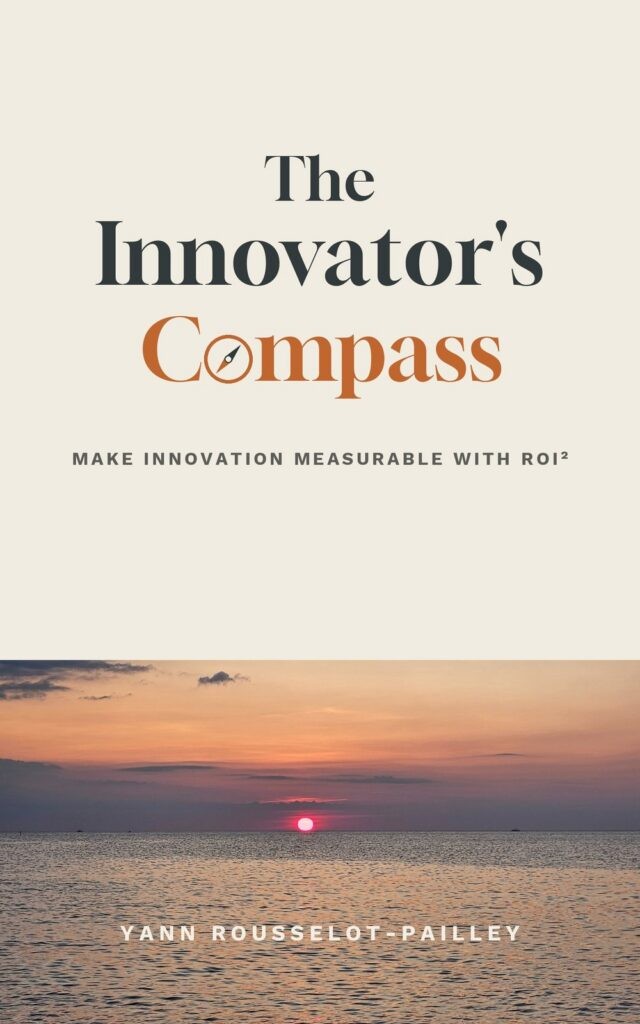
The framework behind the catalogue
The Innovator’s Compass sets out the S4IL framework this catalogue follows, the AI-augmented organizational memory beneath it, and ROI² across four capitals: financial, strategic, intangible and learning.