How Family-Owned Brands Keep Their Soul—And Stay Ahead
This summer, I traveled to the south of France and northern Italy. As always, my passion for innovation management led me to seek valuable lessons for innovators in Saudi Arabia. To my surprise, this journey took me from cherished childhood memories with my Italian grandmother to the fragrant fields of Grasse, ultimately guiding me to an unexpected insight: a framework that can help Saudi family-owned businesses enhance their capacity for innovation.
Le Bar-sur-Loup – Close to Grasse – South of France
The cicadas were already rehearsing when I rolled down the window and breathed in the faint, sugary note that always hangs in the surroundings of Grasse, the capital of perfume and fragrances. Le Bar-sur-Loup is one of those picturesque villages that were founded at the end of the 12th century to harvest orange-blossom absolutes and jasmine flowers to craft some of the best perfumes ever made. My parents were taking me to this village when I was a kid, so it made sense for me to buy my summer property there 2 years ago.
MANE’s hillside campus has been in this village since 1871. Since I bought my apartment in Le-Bar-Sur-Loup, I followed MANE’s news, and recently one of them caught my eye: "Samantha Mane is stepping in as fourth-generation CEO this year." I also learned that MANE has planted deeper roots in Saudi Arabia through a joint venture with another family firm, Banawi Industrial Group (B.I.G.) Banawi, blending flavours for Middle-Eastern palates.
One Week Later, Bolzano, in Northern Italy
Fast-forward to the Dolomites. My wife and I were trekking and cresting a limestone ridge when I recognized a shape in the mountains – this shape was on the packet of my grandmother’s favorite biscuits, Loacker wafers, which took me straight back to childhood. My Italian grandmother—impeccably coiffed—paired Loacker wafers with espresso every Sunday.
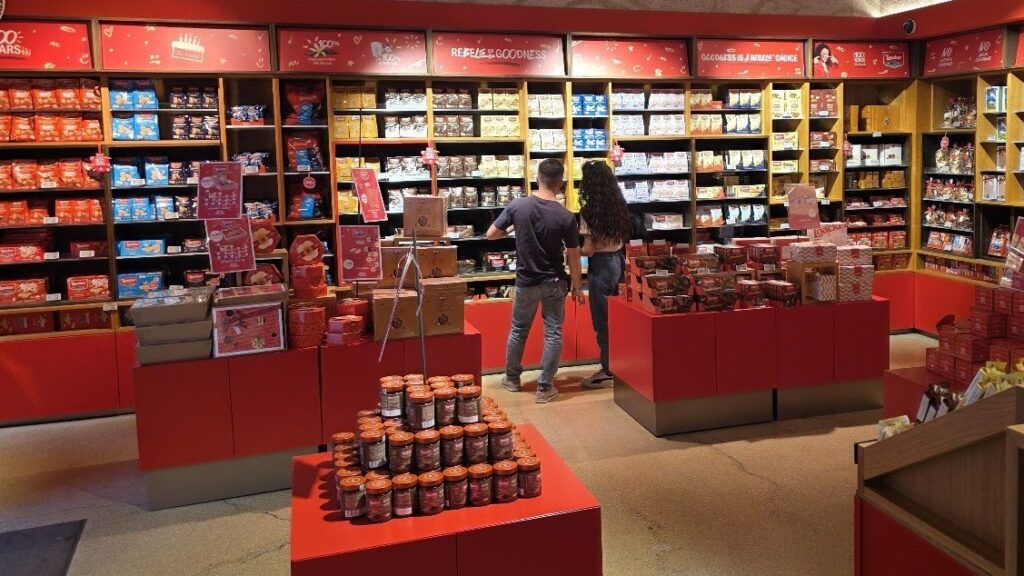
When we went down to Bolzano, where Loacker was founded, I discovered that the company is celebrating its "100th anniversary". I entered Loacker’s flagship coffee shop. Cocoa and toasted hazelnuts filled the air. For a moment, I was eight again. Three summers ago, newly relocated to Riyadh, I rounded a supermarket aisle and froze: the same red-and-white Loacker packs, stacked shoulder-high. I tossed three into the cart; the cashier laughed at my grin. The Alps, it seemed, had followed me to Arabia – courtesy of Al Kabli Holding, a second-generation Saudi distributor.
What is Rooted Innovation?
Scholars call it "embedded innovation" or "innovation through tradition"—recombining inherited know-how with new markets, technologies, or formats (De Massis et al., 2016). I prefer the term "rooted innovation", where novelty is inseparable from place, culture, and legacy (Sundbo & Fuglsang, 2020).
MANE (154 years, 4th generation), B.I.G. (59 years, 2nd generation), Loacker (100 years, 3rd generation), and Al Kabli (59 years, 2nd generation) are living case studies of how families scale without uprooting who they are.
What makes these companies special is how their stories taste, smell, and feel—and how each generation adds a verse without changing the melody.
Could you keep the icon and refresh the recipe? Loacker still draws on Alpine spring water and its hazelnuts—yet now offers 30% Less Sugar and Multigrain lines wrapped in lighter, paper-based packs. The crunch of nostalgia—lighter on the waistline.
Own a hard-to-copy craft. MANE didn’t outsource freshness; it built JUNGLE ESSENCE super-critical CO2 extractors and an AI insights lab anticipating regional flavour cravings. A 19th-century perfume instinct, upgraded for the 21st.
MANE and Loacker Are "Non-Pivoting" But Heading to the Future
When Loacker entrusts Al Kabli to shepherd wafers through desert heat, it’s more than a contract—it’s kinship. MANE and B.I.G. sealed their JV the same way: fewer PowerPoints, more shared lunches. Compatibility of governance and values lowers friction and speeds decisions.
Jean Mane passes the baton to Samantha Mane; Loacker’s third-generation pilots more health-forward SKUs; Eng. Wael Kabli digitises a refrigerated fleet with ERP. Heritage becomes a compass, not an anchor.
From Roots to Shoots: A Framework for Innovating Family Businesses
If you’re running a family business, remember that your founders were the first disruptors in your bloodline. Honouring them means preserving their instinct to innovate.
- Map your living roots—innovation included.
- Launch one heritage-led prototype.
- Invest patient capital in a hard moat.
- Create a reverse-mentoring board.
- Partner where values rhyme.
- Track and tell your Tradition × Innovation score.
Heritage isn’t a museum piece—it’s a launchpad.
Which part of our story could become tomorrow’s competitive edge? Your grandmother’s recipe, your father’s supplier network, your children’s digital fluency—each is a root waiting to produce new shoots. Sometimes all that’s missing is an outside eye to help graft tradition onto opportunity.
How Innovation-Ready Is Your Organization?
Take the free Innovation Maturity Diagnostic — a 3-minute self-assessment based on 30 years of field research across 50+ countries.
Take the Diagnostic →More from Innovation Mastered